

When Your Data Is Breached, the Scam Often Comes Later

This article explores what happens after a data breach, why it often leads to targeted scams, and what you can do to protect yourself.
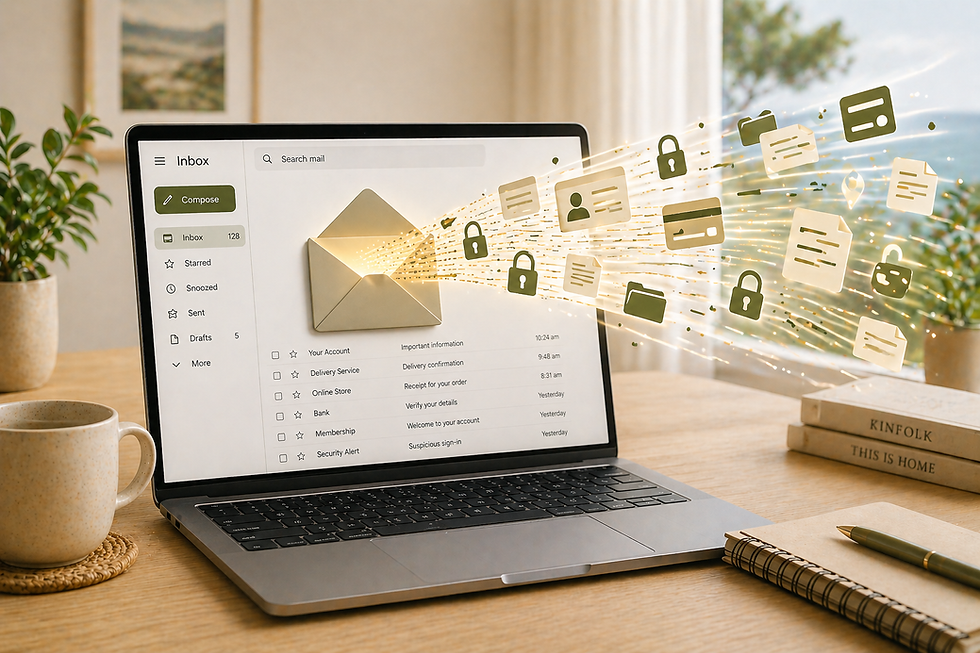
We’ve all heard about data breaches in the news. Big names. Companies we trust. Reports about personal information being exposed.
It can feel like just another headline and it is easy to think of it as something distant. Something that happened to a company - not you.
Why this matters in Australia
Scams are not a small issue. Australians reported $2.18 billion in scam losses in 2025, with over 480,000 reports. People aged 65+ continue to experience some of the highest financial losses. This doesn’t happen because people are careless.
It happens because scams are:
well-timed
well-researched
and increasingly personalised
The Australian Signals Directorate’s Australian Cyber Security Centre also reported that in the 2024–25 financial year it received more than 84,700 cybercrime reports, about one every six minutes. The average self-reported cost of cybercrime for individuals rose to $33,000.
So this is not a niche issue. It is part of everyday digital life now.
More info here:
What is a data breach exactly?
A data breach happens when personal information is accessed, exposed, or stolen without permission.
This can include things like:
your name
email address
phone number
home address
date of birth
or even identity documents like your driver licence or Medicare details
Not every breach is the same. Some only involve basic contact details, while others include more sensitive information. Once that information is out, you no longer control where it goes.
More info here:
What happens after a breach the part most people don’t see

A data breach is rarely the end of the story. In many cases, it’s the beginning of the next step. Once personal information is exposed, it can be:
stored
shared
sold
or combined with other leaked data
And that’s when scams become more targeted. Instead of a random message, you might receive something that:
uses your name
references a company you actually use
arrives at a time that feels relevant
That’s why people often say: “That message looked completely real.” Because parts of it actually are.
More info here:
A real pattern we’re seeing (including locally)
After major breaches like Optus and Medibank, authorities warned that scammers would use exposed information to target people.
This often shows up as:
emails that look legitimate
text messages that feel expected
phone calls that sound convincing
For example, after the Optus breach, Scamwatch warned that scammers would impersonate the company and attempt to collect personal or banking information.
More info here:
https://www.scamwatch.gov.au/about-us/news-and-alerts/browse-news-and-alerts/optus-data-breach-scams
Even locally on the Sunshine Coast, cases like the Noosa Council fraud incident have shown how sophisticated scams have become. While that case was not a data breach, it involved highly targeted and convincing communication that led to significant financial loss.
More info here:
Why these scams are so convincing
Scams used to be easier to spot. Now they are designed to feel normal.
They often:
look like companies you recognise
use correct branding
arrive at the right time
create a sense of urgency
Cyber security reporting shows that criminals actively use stolen credentials to access accounts and build more convincing attacks.

More info here:
The simple habit that protects you most
If there is one habit that makes the biggest difference, it’s this:
Don’t click links in messages or emails unless you have requested them.
Instead:
Close the message
Go to the official website or app yourself
Log in from there or contact them directly via a trusted channel
This removes most of the risk immediately.
How to check if your data has already been exposed
You can check your email using: https://haveibeenpwned.com
This tool is widely used and recommended in cyber security guidance.
If your email appears in a breach:
change your password
don’t reuse it elsewhere
turn on two-factor authentication
More info here:
What to do if your data has been exposed
Start with these steps:
Change important passwords (especially email)
Turn on two-factor authentication
Be cautious with incoming messages
Don’t click links — go directly to websites
Contact your bank if financial details are involved
If identity information is affected, you can contact IDCARE for support.
More info here:
What to do if you already clicked or entered details
Act quickly, but calmly.
Change passwords immediately
Contact your bank if needed
Monitor accounts
Seek help if unsure
You can report scams or get help via:
📞 1300 292 371
Learn more about Data Breach Scams in Australia on the official government websites provided.


Comments